Tile Placement Tactics: Domino Challenge succeeds by focusing on the core mechanics of dominoes without unnecessary distractions. The AI opponents are surprisingly thoughtful, forcing you to consider not just your own tiles but also the broader board state. The leaderboard adds a satisfying long-term goal, and the browser-based design means you can jump into a match in seconds. It is an ideal choice for anyone looking for a low-pressure yet mentally engaging puzzle experience.
In Tile Placement Tactics: Domino Challenge, the primary goal is to be the first player to empty your hand of all domino tiles during a round. Each round begins with a fresh distribution of tiles among four participants. Play proceeds in a clockwise order, with each person adding one tile to the growing layout on the board. A tile can only be placed if one of its ends matches an open end already present. When a player successfully places their last tile, the round ends immediately. Points are then calculated based on the total value of tiles still held by the other three players. These points accumulate across multiple rounds, and the competitor with the highest overall score eventually tops the leaderboard.
Each turn presents a decision point. If you hold a tile that matches an open end, you must decide which end to play on and whether to save certain tiles for later. If no match is possible, you have two options: draw a tile from the boneyard (the remaining pile) or pass your turn. Drawing adds to your hand, potentially making it harder to finish first. Passing lets you skip without adding tiles, but it also gives opponents more opportunities to clear their hands. Skilled players weigh these options carefully, considering not only their own hand but also the visible tiles on the board and the likely holdings of others.
The game includes computer-controlled opponents that provide a consistent challenge across sessions. Their decision-making algorithms simulate human-like reasoning, such as prioritizing tiles that keep multiple options open or blocking ends that would benefit others. New players will find the AI forgiving enough to learn the basics, while experienced domino enthusiasts will face opponents that force them to think several moves ahead. The difficulty does not ramp up artificially; instead, the AI adapts its play style based on the board state, making each match feel fresh and unpredictable.
An integrated leaderboard records your performance across all completed rounds. Your total points and win-loss record are updated after each session, allowing you to compare your progress against other players worldwide. This feature adds a layer of long-term motivation, as you can set personal goals to improve your ranking. The leaderboard is updated in real time, so you can see how your latest victory or narrow loss affects your standing. For those who enjoy measuring their skills against a broader community, this system provides a clear and fair metric.
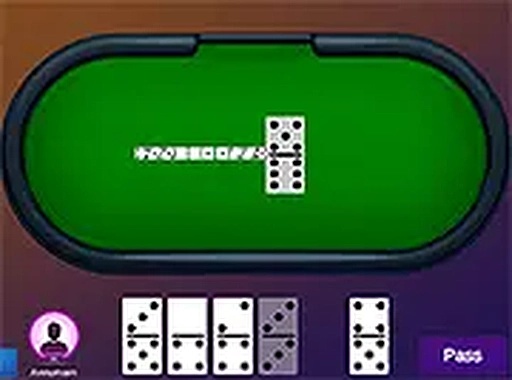
The interface is clean and uncluttered, with large, clearly numbered tiles that are easy to read on any screen size. Color coding distinguishes each player's tiles, and the board layout remains organized even as the game progresses. Sound effects are minimal and non-intrusive, with an option to mute them entirely. Because the game runs entirely in a web browser, there are no downloads or installations required. This makes it accessible on a wide range of devices, from desktop computers to tablets and smartphones, as long as an internet connection is available.











Player Comments
Sign in to comment
You must be logged in before posting a review or rating.
No account? Create one
No comments yet. Be the first to comment!